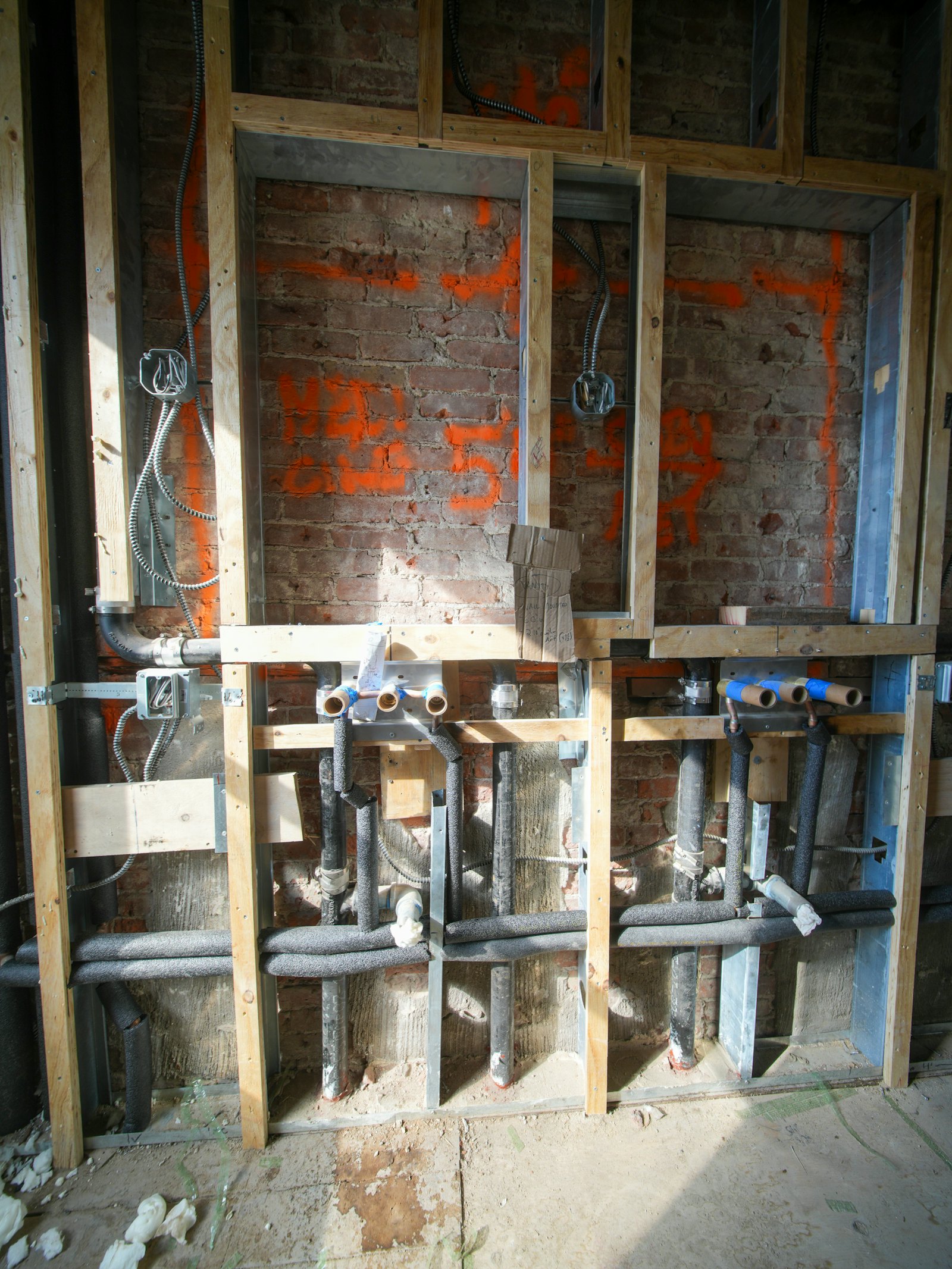
A basement bathroom is one of the most useful additions you can make to a Northern Virginia home. It turns a finished basement into a real guest suite, a teenager’s hangout, or a place to rinse off after yard work. It is also one of the trickier bathrooms to build, because almost everything about plumbing gets harder below ground.
This guide walks through how building a bathroom in a basement actually works, based on the 18 basement bathrooms we have built across Fairfax, Loudoun, and Prince William counties.
Step 1: Find out where your drain is
Everything starts with your main drain line. In most Northern Virginia homes built after the 1970s, the main line leaves the house below the basement slab, which means a new toilet and shower can drain by gravity. In older homes in Arlington and Alexandria, and in some split-levels, the main line often exits above the basement floor.
That single detail decides which of two approaches you need:
- Gravity drains. We cut a trench in the concrete, run new drain lines to the main, and patch the slab. This is the most reliable setup and the one we recommend when it is possible.
- An up-flush or ejector system. When the drain is too high, waste is pumped up to the main line. Modern systems are quiet and dependable, and they avoid most of the concrete work.
In our recent projects, about 70% of basements could use gravity drains, and the rest needed a pump.
Step 2: Plan the layout around the plumbing
Good basement bathroom design keeps the toilet, shower, and sink as close to the main drain as the room allows. Every extra foot of trench adds cost. We also check ceiling height under ducts and beams, since a shower needs more headroom than you might expect, and we look for a spot where the exhaust fan can vent outside.
For layout ideas and what we include, see our basement bathrooms page.
Step 3: Deal with moisture first
Basements in Northern Virginia sit in clay-heavy soil that holds water, and humidity climbs every summer. Before we frame a single wall, we check for signs of water coming in. Then we build with materials that can handle a damp environment:
- A vapor barrier and rigid foam against the foundation walls
- Mold-resistant drywall, with cement board in the shower
- A properly sized exhaust fan, vented to the outside, on a timer or humidity sensor
A basement bathroom that skips moisture control usually looks great for a year or two, and then the paint starts peeling.
Step 4: Permits and inspections
Adding a bathroom to a basement almost always needs plumbing, electrical, and building permits. Fairfax, Loudoun, and Prince William counties each run their own permit offices, and inspection schedules vary. Across our last 10 basement projects, permits took 2 to 4 weeks to come through in Fairfax County and 1 to 3 weeks in Loudoun County.
We handle the drawings, applications, and inspection scheduling as part of every project.
Step 5: Build, finish, and inspect
Once permits are in hand, the build follows a predictable order: break and trench the slab, rough in plumbing and electrical, pass the rough-in inspection, frame and insulate, hang board, waterproof the shower, tile, then set fixtures. Our basement bathrooms in Northern Virginia have taken 3 to 6 weeks from demolition to final inspection.
What it costs to build a bathroom in a basement
Here is what our recent basement bathroom projects in Northern Virginia have cost.
| Project type | Typical range in our recent projects |
|---|---|
| Half bath (toilet and sink) | $12,000 – $18,000 |
| Full bath with shower | $25,000 – $38,000 |
The biggest cost drivers are how far the bathroom sits from the main drain, whether a pump is needed to carry water up to it, and the tile and fixtures you choose.
Building a basement bathroom on a budget
If you are working with a tighter budget, three choices make the biggest difference: place the bathroom right next to existing plumbing, start with a half bath, and choose a prefabricated shower base over a fully tiled one. One of our budget basement bathrooms in Centreville came in at $11,500 using all three.
Ready to add a bathroom to your basement?
Every basement is different, so the best first step is a look at yours. We offer a free at-home consultation, and you will get a written proposal before any work begins. Contact us to set one up, or read more about new bathroom construction if you are adding a bathroom elsewhere in your home.